
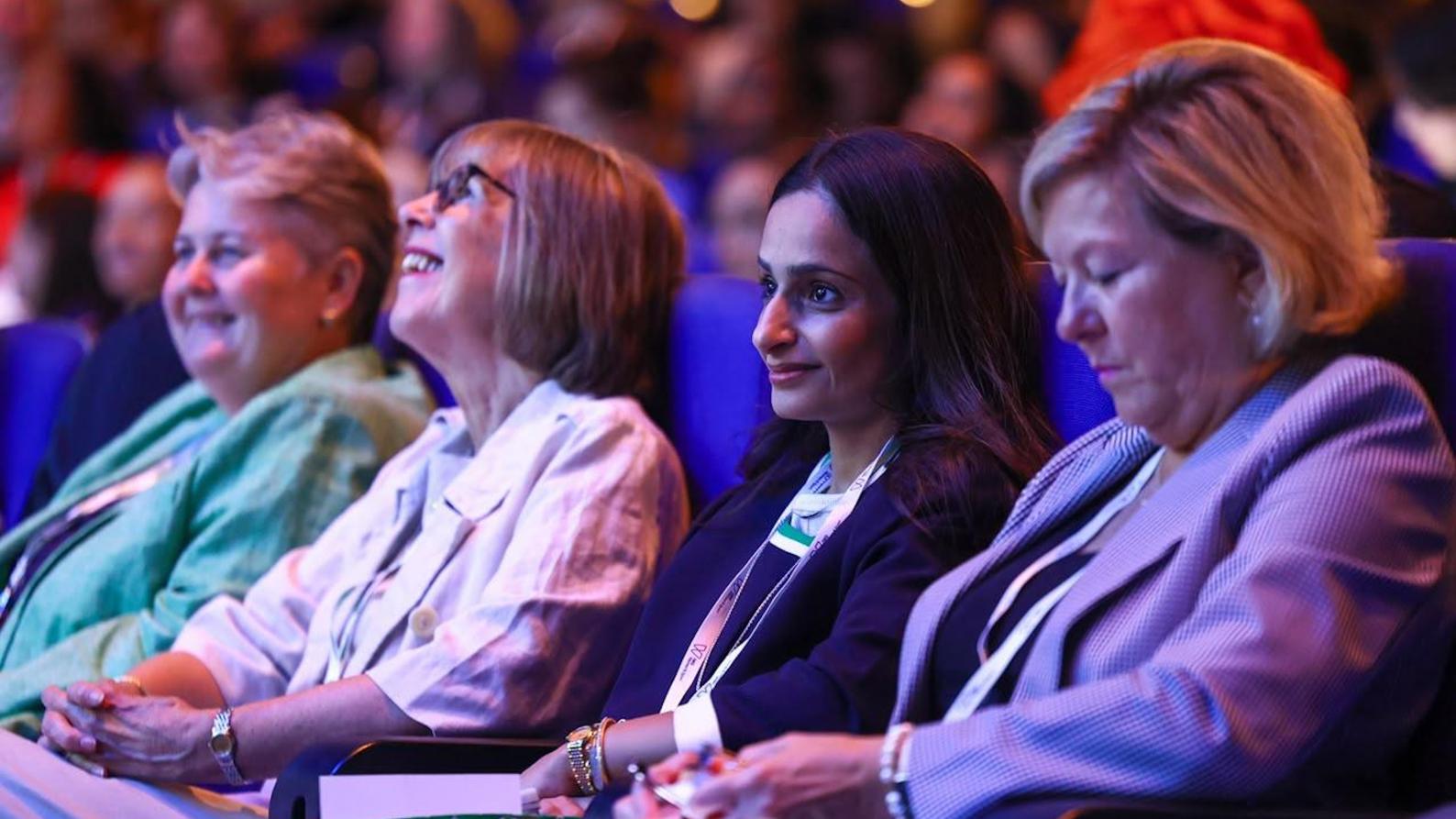
Her Excellency Shaikha Dr Hessa bint Khalid Al Khalifa, Member of the Board of Directors of the Bahrain Olympic Committee and Chairperson of the Equal Opportunities and Gender Balance Sports Field Committee, participated in the IWG Global Summit 2026, held in Birmingham, United Kingdom, from 9 to 11 July 2026, with the participation of delegations, experts and decision-makers from around the world.
The Bahrain Olympic Committee delegation also included Fajer Jassim Hassan, Member of the Board of Directors, Director of International Relations of the Bahrain Olympic Committee and Member of the Equal Opportunities and Gender Balance Sports Field Committee; Wafa Ibrahim Al-Jazzaf, Member of the Equal Opportunities and Gender Balance Sports Field Committee; and Hala Zayed Al-Zayani, Mental Health Therapist at the Bahrain Olympic Committee.
Her Excellency Kirsty Coventry, President of the International Olympic Committee, opened the summit proceedings. In her opening address, she affirmed that achieving gender equality and empowering women in sport are among the fundamental pillars of the Olympic Movement. She also stressed the importance of strengthening women’s participation at all levels of the sports sector, supporting female leaders and creating a more inclusive and sustainable sporting environment.
Comprehensive Scientific Programme
The first day of the summit featured a series of panel discussions and scientific presentations addressing women’s experiences in sport, the importance of good governance in developing sports organisations, mechanisms for advancing women’s football and the factors driving investment growth in women’s sport.
The summit also presented a number of specialised research papers covering international frameworks designed to support female athletes during pregnancy and after childbirth, thereby enabling them to continue their sporting careers; global tools for measuring progress in gender equality legislation and policies; and an analysis of media coverage of women’s sport.
Discussions also addressed the economic and social challenges limiting girls’ participation in sport, as well as programmes designed to prepare and qualify female champions for leadership roles within sports organisations.
The first day’s sessions further reviewed the latest International Olympic Committee developments in the field of gender equality, best practices in sports governance and sports media strategies aimed at increasing the visibility of women’s sport and sustaining its growth.
Removing Institutional Barriers
The second day’s sessions focused on reforming sports systems, legislation and facilities to help remove institutional barriers to women’s participation. They also examined the responsibility of media organisations, sports federations and clubs in highlighting the achievements of women in sport and developing female leadership programmes.
The sessions also addressed the development of technological solutions to protect female athletes and promote a safe digital environment, the enhancement of sports facilities in line with the highest safety standards, the preservation of women’s sporting heritage, the financial sustainability of women’s sport and the development and qualification of female coaches at the international level.
Towards a More Inclusive Future
On the third day, the summit discussed a number of strategic issues, most notably the development of healthcare for female athletes, the identification and support of female talent, the preparation of sports leaders from an early stage, the promotion of gender balance within sports bodies, the removal of cultural and social barriers and the provision of a safe and inclusive sporting environment for women.
Her Excellency Shaikha Dr Hessa bint Khalid Al Khalifa affirmed that participation in the summit provided an important opportunity to explore the latest international experiences and innovative initiatives in the development of women’s sport, as well as to establish strategic partnerships with international organisations, Olympic committees and sports institutions. These efforts support the Bahrain Olympic Committee’s work to promote equal opportunities and empower women in accordance with international best practices.
She added that the research and practical experiences presented during the summit in the fields of governance, leadership, innovation, investment, media, health and sustainability provide an important reference for developing national initiatives and building a more inclusive and equitable future for women in the sports sector.